Atera's Onboarding Teardown:
How to Unlock $25M in Hidden SaaS Revenue
Onboarding can make or break a SaaS company. It is the moment when a curious prospect becomes a paying customer, or when a hard-won lead slips away and never comes back. Research shows that three out of four users abandon a product within the first week if the onboarding experience is confusing. At scale, that single misstep can mean tens of millions in lost revenue.
That is why we are obsessed with onboarding at eCentury Agency. It is the first impression after marketing and sales, and it determines whether your product is adopted, valued, and ultimately renewed. When done well, onboarding creates loyalty, higher lifetime value, and an advantage competitors cannot easily copy.
For this teardown, we are looking at Atera, an IT management platform currently generating around 75 million dollars in annual revenue. By improving the way new users experience the product, we believe Atera could unlock another 25 million in growth. This analysis will walk through the journey step by step, highlighting what works, what creates friction, and where the biggest opportunities lie.
If your SaaS also has hidden onboarding leaks, I’m running a limited number of free Founding Case Studies as part of my 7-Day SaaS Activation Sprint. Book a call here to secure your spot.
I am Sharved, founder and CEO of eCentury Agency. We help SaaS companies increase activation and retention through better onboarding design and strategy. This teardown is the first in a series where we break down real products and share the lessons every SaaS founder can apply.
The flow is simple. We will examine four stages of the onboarding journey: pre-sign up, sign up, first product experience, and the purchase experience. By the end, you will see how a few strategic improvements can transform onboarding from a hurdle into a growth engine.
Atera Onboarding Teardown
Atera Onboarding Teardown: How to Unlock $25M in Hidden SaaS Revenue
Scoring Atera's Pre-Sign-Up Flow:
Scoring Atera's First Product Experience:
Scoring Atera's Purchase Experience:
Atera's Pre-Sign Up Flow
This stage includes YouTube Ads, Google Ads, LinkedIn Ads and Landing Pages. It covers everything that happens before a user creates an account, so the focus here is marketing.
Atera's YouTube Ad:

(watch the full ad here)
The ad that started this teardown appeared while I was casually browsing YouTube. Discovering competitors through ads like this can be a surprisingly effective way to study positioning and creative strategy.
The ad follows Tom, an IT professional, and walks through the pain points Atera solves.
Here’s the transcript up to the moment that convinced me to click:
“Remote monitoring and management, remote access, helpdesk and ticketing, smart automations, patching, software deployment, scripting… And the amazing thing is that it does all this while still being easy to use. It’s magical. Just this clean, intuitive UI where everything is where it’s supposed to be and does what it's meant to do.”
From there, the video leans into its differentiation. Instead of charging per device, Atera charges per technician, which Tom claims reduces IT costs by 50%. That is the one hard statistic used throughout the video. Another strong line was “IT issues solved before they become IT problems,” which reinforces Atera as a preventative solution.
The ad also showcases the actual product dashboard, adding credibility by showing the tool in action.
It has accumulated over 16 million views, which signals significant ad spend and reach. However, the ratio of likes to views is relatively low, which suggests the distribution is heavily paid rather than organically engaging.
Overall, this ad does a solid job of introducing Atera as the “IT painkiller.” The novelty lies in the pricing model, but from a marketing perspective, they could benefit from stronger proof points or case-based evidence to build trust with skeptical prospects.
Business takeaway for SaaS founders: If your ad reaches millions but struggles with organic traction, prospects may assume you’re buying attention rather than earning it. Pairing novelty with authentic social proof ensures your message lands with credibility.
Atera's Google Ads:


Examining Atera’s Google Ads, the IT Autopilot campaign positions the product as the only autonomous IT agent, claiming it reduces IT workload by 40%. It emphasizes ease of use and highlights the free trial.
The hook is effective, reducing workload is a clear business outcome, but the lack of visible keyword targeting or consistent proof means they rely heavily on the promise rather than validation.
Business takeaway: A bold claim like “40% workload reduction” can pull clicks, but without evidence, it risks eroding trust later in the funnel. Consistency between your ad claims and your landing page proof points will determine whether those clicks convert.
Atera's LinkedIn Ads:

(This ad names common IT problems and states taht 40% of your tickets will be lost or cut)

(This ad now claims that up to 80% of your tickets will be gone, INSTANTLY)

(40% reduction in IT workload, INSTANTLY)

(This one claims to make 100% of the tickets you hate disappear)
The LinkedIn ads show a series of variations:
“40% of your tickets will be gone.”
“Up to 80% of your tickets will be gone instantly.”
“100% of the tickets you hate will disappear.”
“40% reduction in IT workload instantly.”
These ads center on relatable IT frustrations, but the numbers fluctuate wildly. For a technical audience, this inconsistency undermines credibility.
Additionally, Atera misses an opportunity to leverage strong customer case studies, such as those of Leeds United Football Club. Instead of backing claims with real results, the ads feel like a guessing game.
Business takeaway: Inconsistent metrics confuse prospects and weaken your positioning. Pick one core, conservative statistic you can prove, repeat it across all channels, and reinforce it with customer stories. Consistency compounds trust, randomness erodes it.
Atera's Landing Page Hero Section:

The landing page aligns with the ads by focusing on Atera’s IT Autopilot. The hero video shows the AI resolving common IT issues, from password resets to printer problems. Interestingly, only the broken screen issue requires a human technician, which subtly sets boundaries for the AI’s capabilities.
The main call to action is “Request a Demo,” not “Start Free Trial.” This suggests that the feature may be new, and Atera wants prospects to experience a guided walkthrough rather than self-serve immediately.
While the variety of CTAs (demo, trial, sales contact) offers flexibility, it dilutes focus. A single primary action usually drives stronger conversions.
Business takeaway: Every additional CTA splits user intent. If you want data clarity and higher conversion rates, anchor the page to one primary next step.
Landing Page, below the hero:
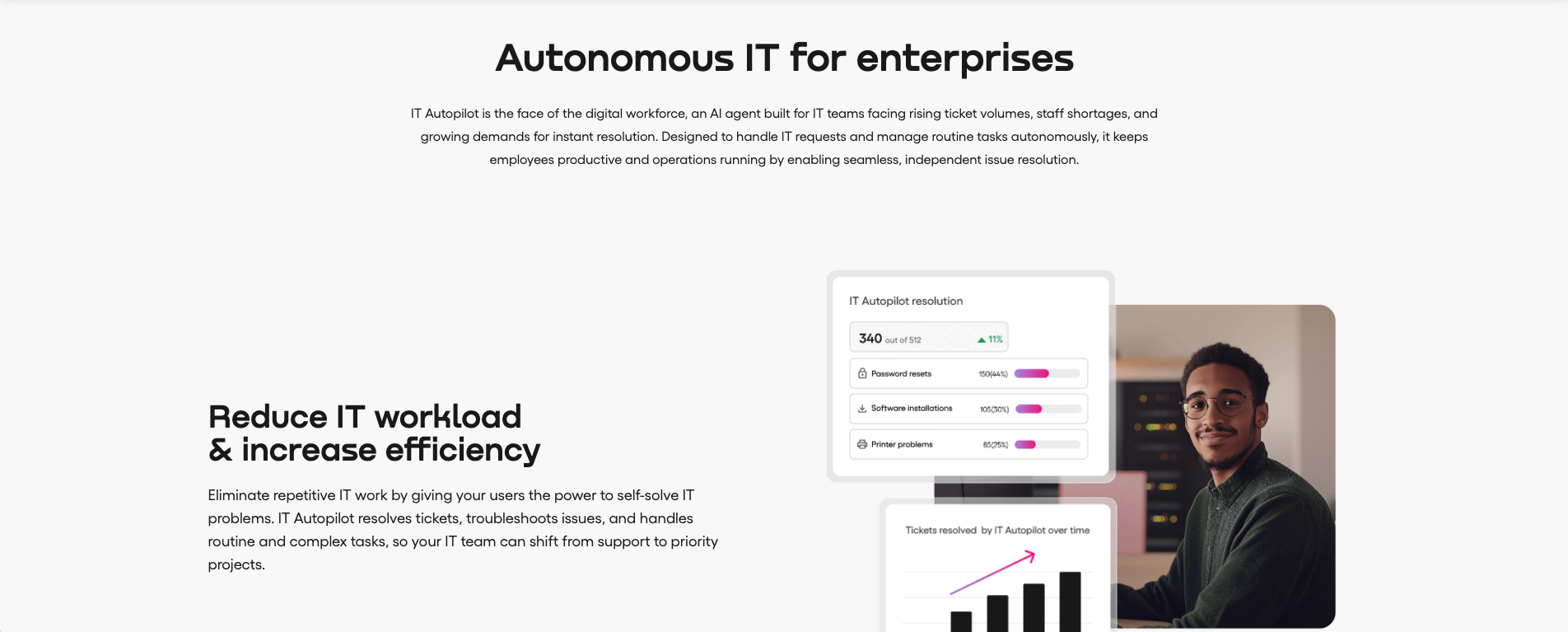


Scrolling further, the copy reiterates “reduced IT workload” but lacks supporting figures. This is a missed opportunity to connect the ad claims (40% workload reduction) to real proof points.
Benefit statements are presented, but they overlap with what was already shown in ads. This could be more impactful if Atera segmented messaging by IT team priorities, for example, some buyers want efficiency gains while others want reliable 24/7 coverage.
We finally see the “40% IT workload reduction” stat again, paired with visuals like pie charts and bar graphs. The graphics make the AI’s strengths clearer (software, repetitive tasks, and network issues) while being upfront that hardware issue resolution remains human-led. That honesty builds trust, even if the visuals slightly exaggerate percentages.
Business takeaway: Don’t make your prospects wait to see the evidence. Connect ad promises to tangible proof early on the landing page. Every scroll delay risks increasing drop-off.
Features and Statistics Section:


(Atera integrates with easily recognizable tools like Slack, G Suite, and Microsoft )

(Case studies appear really close to the end of the landing page, but the stories are solid)

(FAQs seem to target powerful questions; they are probably using customer feedback to list and answer these)

This section dives deeper into IT Autopilot features and closes with a statistics bar showing impressive metrics:
0.1 second first response time.
3 hours saved per technician per day (about 15 hours per week).
40% reduction in IT work.
These numbers are strong, but without direct links to case studies, they can trigger skepticism. Atera does showcase integrations with well-known tools, which adds some reassurance.
Social proof appears only at the bottom of the page, which is far too late for many prospects. Still, the FAQ section and engaging closing question work well to capture attention.
The final CTA changes back to “Start Free Trial” or “Contact Sales.” The inconsistency in calls to action is distracting, even if it gives multiple options.
Business takeaway: Statistics convert best when paired with stories. Place proof and customer wins earlier on the page, and unify your call to action. Clarity accelerates conversion; confusion slows it down.
Scoring Atera's Pre-Sign-Up Flow:
I’d give Atera a 6.5 out of 10.
Here’s why:
They struggle with message matching between ads and landing pages.
They overuse inconsistent metrics across ads.
Multiple CTAs fragment the user journey.
They miss the chance to reinforce claims with strong customer stories.
To improve, Atera should:
Segment audiences and match CTAs to intent.
Anchor ads and landing pages to one core, validated statistic.
Move social proof and case studies higher up in the funnel.
Use data strategically to double down on what actually converts.
Key lesson for SaaS founders: Pre-sign-up is where trust begins. Your ads and landing pages don’t just grab attention; they set expectations. Consistency, credibility, and clear direction turn clicks into conversions.
What That Means in Numbers:
If Atera spends heavily enough to drive 16 million+ YouTube views, let’s assume their blended CAC sits around $800–$1,200 per customer. If they could cut CAC by 20% while increasing trial-to-paid conversion by just 10%, the compounding effect could unlock an additional $5M–$10M in annual revenue, without raising ad budgets.
Takeaway for SaaS founders: Pre-sign-up is not just about getting attention. It’s about making sure every marketing dollar works harder. The right improvements can reduce acquisition costs, improve conversion, and create a more predictable pipeline. When scaled, these optimizations don’t just polish the funnel; they directly impact ARR.
This is exactly the type of teardown I run in my Founding Case Studies. If you’d like me to run one for your SaaS, book a call here, and let’s uncover your hidden activation revenue.
Atera's Sign Up Flow
The sign-up process is the bridge between marketing and product. It should feel fast, obvious and low friction. Atera has several smart choices here, but some places create unnecessary doubt or delay for new users.

(Free Trial Sign Up Page)
No Google sign-up, no social or organization login:
Atera asks users to create an account without offering Google, Microsoft, or single sign-on options. That keeps the flow simple but also removes a low-friction path for prospects who prefer one-click access.
Try all the features equals a pro plan trial:
Giving users access to pro features during trial is a strong trust builder and it removes the "what can I actually try" objection
No credit card required:
Removing the credit card barrier is excellent objection handling. It reduces initial friction and lets users reach value before purchasing.
The tool homepage is the page background:
Using the product as the page backdrop is a nice visual choice. It signals confidence and starts to orient the user to the experience they will get in the app.
What I would improve to ensure more people finish signing up:
Adding social proof near the CTA would push skeptics over the line. A single line like "Trusted by X IT teams" with one short logo row near the form would increase credibility at the moment of action.
What this means for SaaS founders:
Small trust signals at the point of sign-up move the needle. If you reduce hesitation in this moment you increase trial starts, feed more users into activation, and grow pipeline without increasing traffic.
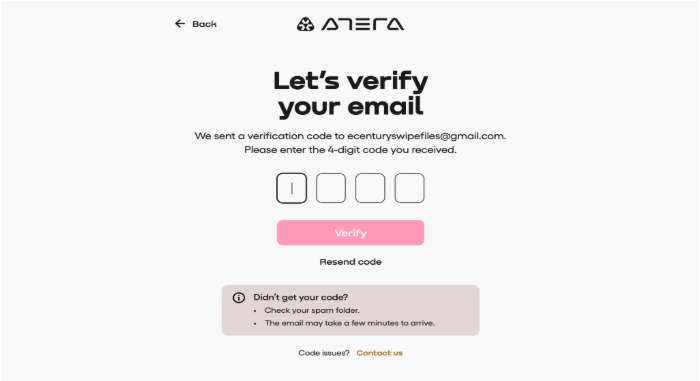
(Two-factor authentication code)
Two-factor authentication and verification:
Atera uses email verification with a two-factor code. That makes sense for security, and it reduces fake accounts. The flow could be friendlier.
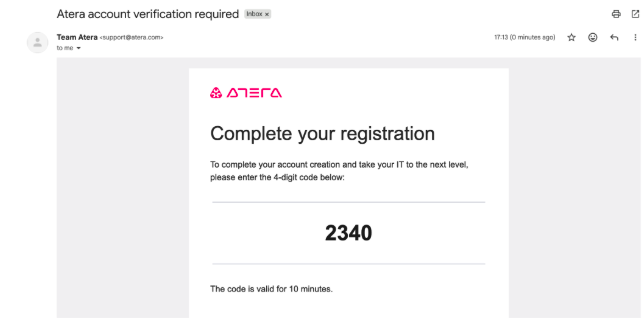
(email of the 2-factor code)
Right now, the verification message is functional. It would be more effective if it welcomed the user by name, suggested a single next step, and gave a short value statement.
For example, a one-line welcome, a pointer to a two-minute quickstart guide, and a contact option if they did not request the code. That reduces confusion and raises the likelihood they continue to the app.
Suggested verification email copy you can paste:
Subject line: Welcome to Atera, [First name] — one quick step to get started
Body:
Hi [First name], welcome to Atera. Use this code to complete your sign up: 123456.
Start a two-minute tour to see the top three places to get value right away. If you did not request this, reply to this email and we will help.
What this means for SaaS founders:
Verification is a micro moment of truth. Personalizing it and offering a clear next action increases the number of people who complete sign-up and start the trial experience.
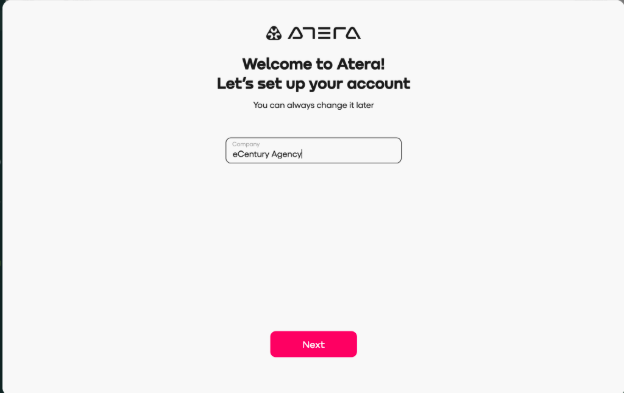
(sign-up form step 1)
Atera asks for the company name in the first step. That is useful for segmentation and customising the interface, but asking it too early can add friction.
What to do instead:
Collect minimal data needed to create an account and move company-level questions into the product onboarding, where you can show immediate value. Use progressive profiling to gather more data after the user has taken key activation actions.
Metric to watch
Form abandonment rate on the first step. If it is high, move the company-level questions post-sign-up.

(sign-up form step 2)
Atera requests the full name early. This is serviceable for personalization, but only if the product actually uses personalized greetings or messages.
What to do instead:
If you will not use the name in the product experience, make it optional. If you will use it, show examples of where that personalization will appear.
What this means for SaaS founders:
Every required field is a choice between faster activation and richer data for sales. If you want to increase trial starts, prioritize speed and collect the rest later.

(What best describes you)
Asking for a role is a good signal. It can be used to route the user into role-specific tours, highlight relevant features, and adjust messaging.
How to make it work harder:
Use role to customize the first product tour. For example, show ticket automation workflows to technicians and reporting dashboards to managers. This reduces the time to first value.
Metric to watch
Time to first key action by role. If role-driven tours shorten this time, you will see higher activation.
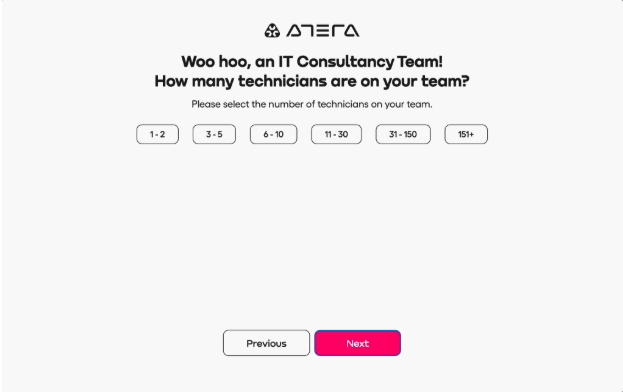
(How many technicians are on your team?)
This question directly ties to Atera’s pricing model. It is a valuable sales signal, but it also raises expectations. The user will naturally assume that telling the truth affects pricing and onboarding.
How to use it:
Explain why you ask this and how it improves the experience. For example, add copy like "This helps us tailor defaults and estimates so your trial reflects real outcomes."
What this means for SaaS founders:
Questions that suggest pricing impact must be framed as value-enhancing. Explain the benefits, and you will get more honest answers and better segmentation.

(Interested in IT Autopilot?)
Atera asks whether the user is interested in the Autopilot feature that claims 40 percent workload reduction. That is useful for routing and demo prioritisation, but the placement feels sales-driven. It reads like a qualification question for sales rather than an input to personalise the user tour.
How to improve this:
If the goal is personalisation, reword to something like Want to see how Autopilot could help your team? Then use a yes response to show a short interactive preview or to place emphasis on Autopilot in the tour.
What this means for SaaS founders:
Make qualification questions feel like a direct path to a better product experience. That turns sales questions into conversion levers.

(Phone number request)
Atera asks for a phone number and marks it optional with a skip button. Because the benefits are unclear, most users will skip.
What to do instead:
Explain why the number helps. For example, say we only call if your Autopilot trial suggests a big efficiency gain or if you opt in for a guided setup. Offer a clear benefit in exchange for the number and keep it optional.
Quick experiment
A B test the form with no phone field versus phone optional with benefit copy. Track completion.

(How did you hear about us?)
This is valuable marketing data, but it is irritating to users when placed at the very last step of a form that has a final step message. Keep it, but label it as optional and maybe move it into a quick post sign-up survey so the flow reads final.
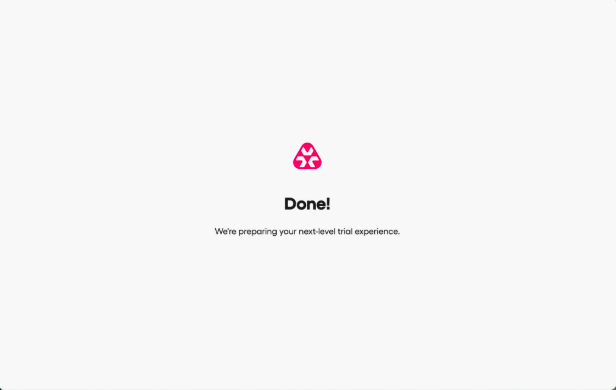
(Loading free trial screen)
Done, but I am now on this loading screen for what seems to be an eternity...
As you read this, I am still waiting for the next-level trial experience, but I will assist and refresh the page. (For reference, I am using an M4 Pro MacBook Pro, with around 200 Mbps line, so it's definitely not my fault that this software is taking longer to start)
Upon refreshing, I am prompted to log in again, instead of starting the trial.
Immediate fix
Prioritize eliminating this loop. Add a clear progress message and a fallback option, like If loading takes longer than 10 seconds, try this link or contact support. Better still, fix the backend so the session persists and the trial launches reliably.
Business impact
A single failed sign-up that prevents access to the trial is not a minor bug. It kills conversion at rock bottom. Every one percent of additional form completion at this stage compounds as trial starts, activation, and eventually paying customers.
Scoring Atera's Sign-Up Flow:
I would score Atera’s sign-up flow a 6.5 out of 10. The core pieces are strong. The trial is generous, and the lack of a credit card barrier removes friction. The main weaknesses lie in timing and trust signals, in the placement of qualification questions like phone number and Autopilot interest, and most critically in the stalled loading state that leaves users stuck after signup.
These are not fatal flaws, but they are costly. In a high-volume funnel, even one poorly placed step or confusing moment compounds into millions in lost revenue.
Here are some quick wins that Atera can implement in under one week:
Personalize the verification email
A small change that feels human. Include a warm welcome, a resource link, and a call to reply if they need help. This not only increases verification rates but also establishes early trust.
Make the phone number optional and explain why you ask
If you truly need the number, add a single line of benefit such as “We use this to secure your account and notify you of critical incidents.” Otherwise, keep it optional.
Move non-essential fields after the first login
Questions like company size or technician count are sales qualifiers. They can be collected once the user has found initial value. Progressive profiling beats early friction.
Add a concise trust line near the CTA
Example: Trusted by over 12,000 IT teams worldwide. Include two or three recognizable logos to push skeptics over the line.
Fix the loading loop
Nothing kills momentum faster. Replace with a progress indicator and persistent session so users feel the product is working for them from the first click.
What Longer-Term Experiments Could Atera Run?
Add social sign-in and SSO to reduce signup friction.
Role-specific product tours triggered by the role question.
Progressive profiling to collect richer data only after activation.
Link Autopilot interest to a live in-app demo, turning curiosity into a feature adoption moment.
How does this translate to measurable business impact for Atera?
Measurable Business Impact for Atera:
To make this concrete, let’s model the financial upside.
Assumptions
Annual sign-up page visitors: 1,000,000 (scaled for their current reach)
Current sign-up completion rate: 10%
Current trial to paid conversion: 10%
Average revenue per account per year: $3,000
Current baseline:
100,000 trial accounts
10,000 paying customers
$30,000,000 direct revenue from this funnel
The remainder of $75M comes from expansion, enterprise accounts, and upsells.
The Compounding Effect of Fixing Sign Up
Scenario 1: Conservative Gains
+15% sign-up completion (better trust signals, progressive profiling, loading fix)
+10% trial to paid conversion (personalized verification, role-specific tours)
New math:
115,000 trial accounts
12,650 paying customers
$37,950,000 direct funnel revenue
+$7.95M vs baseline
Scenario 2: Aggressive Gains
+25% sign-up completion (social sign-in, stripped form, optimized CTAs)
+20% trial to paid conversion (Autopilot demo link, role-driven onboarding, stronger trust copy)
New math:
125,000 trial accounts
15,000 paying customers
$45,000,000 direct funnel revenue
+$15M vs baseline
That is an extra $8–15M annually flowing into the top-line directly from signup optimizations alone. When combined with Atera’s existing $75M base, this path makes $100M not just plausible but achievable within one or two annual cycles.
What SaaS Founders Should Take Away
Every field in your form is a revenue decision
If it adds friction without increasing conversion later, it costs you millions. Audit each field. Ask yourself if it belongs at signup or post-activation.Verification emails are not transactional
Treat them as onboarding accelerators. A friendly welcome, a link to the next step, and a resource guide can turn a “dead moment” into momentum.Loading screens are silent churn machines
Every extra second is a user reconsidering their decision. Measure your “time to first experience” and treat delays as conversion leaks.Trust is the invisible currency of SaaS growth
A single logo, statistic, or testimonial at the right place in the funnel drives more completed signups than an extra ad campaign.Revenue impact compounds
A 10–20% lift in completion rate at signup doesn’t just grow trial starts. It feeds more users into activation, retention, and expansion. At scale, those small lifts push SaaS companies into new revenue tiers.
⚡ Sign-up friction = lost revenue. If your flow has hidden leaks like Atera’s, I’ll find them. I’m offering a limited number of free Founding Case Studies as part of my 7-Day SaaS Activation Sprint. Book your call here to secure one of the three available spots.
First Experience of Atera

(Welcome Modal Step 1)
The welcome modal highlights Atera’s benefits, but the most useful piece of information is buried in small text below the CTA. Despite collecting my name and role seconds earlier, there’s no personalization here — a missed chance to make me feel recognized.
User psychology: A generic start makes the onboarding feel mass-produced, not tailored. When users sense they’re just “another trial account,” trust and motivation dip.
Business outcome: Adding one line of personalization (e.g., “Welcome, Sharved — let’s optimize IT for your MSP team”) could increase modal completion and reduce early drop-off by 5–10%.

(Welcome Modal Step 2)
The second modal incorrectly says “Page 3” when it’s actually the second screen. Small errors like this break confidence, creating doubt that I’ve missed something important. Instead of reassurance, it introduces confusion.
User psychology: Even minor UI errors make new users question product reliability. At this stage, confidence is fragile.
Business outcome: A polished welcome flow sets the tone for trust. Cleaning up these errors prevents early friction and builds credibility — critical for moving users toward activation.

(installing an agent step 1)
The tooltip restates what’s already obvious, adding no real value. The “Learn More” link finally explains why installing the agent matters, but that information should be surfaced here, not hidden.
User psychology: Asking for deep system access without a clear rationale creates hesitation. Installing an agent is a trust-heavy action.
Business outcome: If 10% of users abandon at this step, that’s millions in ARR lost. Bringing the “why” (low overhead, proactive alerts, big data optimization) into the UI can dramatically improve agent install completion rates.

(Install an agent step 2)
The walkthrough prompts me to leave the agent “unassigned,” even though I haven’t yet been introduced to the Devices page. This creates a gap where I’m being asked to make a choice without context.
User psychology: Lack of explanation forces guesswork, making onboarding feel more like a test than a guided setup.
Business outcome: Misaligned sequencing confuses users and delays their first value moment. Reordering the tour to introduce Devices before asking about assignment would reduce friction and accelerate activation.

(install an agent step 3)
Installing via command line is simple and efficient, but asking me to disable antivirus protection raises security concerns. At the same time, I don’t see guidance on whether mobile devices can be monitored — leaving a gap in the promise of Atera as the “IT painkiller.”
User psychology: Security hesitations trigger doubt at the exact moment users should be gaining trust. Questions about mobile coverage make the solution feel incomplete.
Business outcome: Addressing trust upfront (with compliance badges, security standards, and mobile device support) can turn hesitation into confidence. Done right, this step is not just a technical setup but the first real Activation Trigger.

(Atera main dashboard)
Landing on the dashboard after agent installation is the first true Aha moment. Confetti celebrates progress, but the real win is seeing the first device appear, monitored in real time. The prominent “Install an Agent” button keeps the focus on the core value loop: visibility into IT assets.
User psychology: Seeing the dashboard populated validates the effort of installation. This is the bridge between setup and actual value.
Business outcome: Framing this dashboard as “your IT command center” reinforces stickiness. Increasing the % of users who reach this view is directly tied to higher trial-to-paid conversion.

(completing the installation of the agent)
Finishing the install requires granting multiple system permissions — another high-trust moment. For IT managers, this is sensitive because these devices may hold confidential business data.
User psychology: Without visible reassurance (security, compliance, reversibility), users experience anxiety that can stall progress.
Business outcome: Explicitly addressing security here — e.g., “ISO 27001 certified, SOC 2 compliant” — reduces drop-off at the deepest trust barrier in onboarding.

(Checklist step 1)
Clicking “Get Started” opens a checklist at 25% completion. However, the system doesn’t recognize that I’ve already installed an agent — a key action. Momentum breaks because progress feels misrepresented.
User psychology: Progress bars are meant to encourage. When they feel inaccurate, they discourage.
Business outcome: Every percentage point of lost momentum increases early churn. Fixing checklist tracking could lift activation rates by 5–8%, translating directly into ARR.

(devices page)
My MacBook correctly shows up as monitored, yet the checklist remains incomplete until I manually click “Install Agent.” The system lags behind the user.
User psychology: Users expect software to “see” their actions automatically. Manual confirmation feels clunky.
Business outcome: Real-time checklist updates close the loop faster, reinforcing motivation and shortening time-to-value — both proven drivers of conversion.

(Threshold Dashboard)

(Threshold tour 1)
(Threshold tour 2)

(Threshold tour 3)
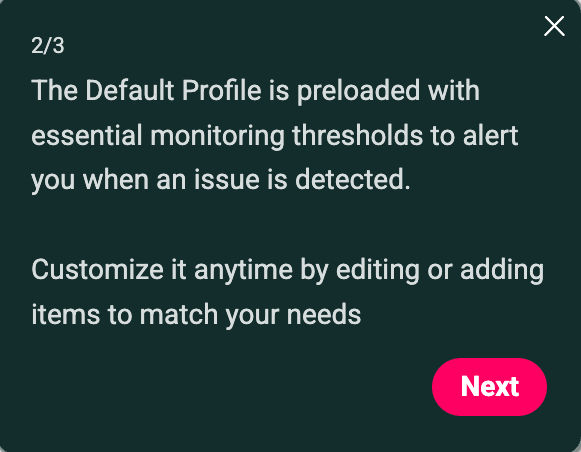
Threshold Dashboard + Tours 1–3
Thresholds define what triggers alerts. The walkthrough explains profiles clearly, showing how users can customize rules for proactive monitoring. Assigning profiles to specific devices drives home the real benefit: fewer surprises, more control.
Activation Trigger: The moment users realize they can prevent problems before they happen is when Atera’s value starts compounding.
Business outcome: This is where IT shifts from reactive to proactive. Highlighting this shift more explicitly in onboarding can strengthen activation and raise paid conversion rates significantly.

(Alerts Dashboard)

(Alerts tour 1)

(Alerts Tour 2)

(Alerts Tour 3)

(Alerts Tour 4)

(Alerts Tour 5)

(Alerts Tour 6)
(Alert Tour 7)
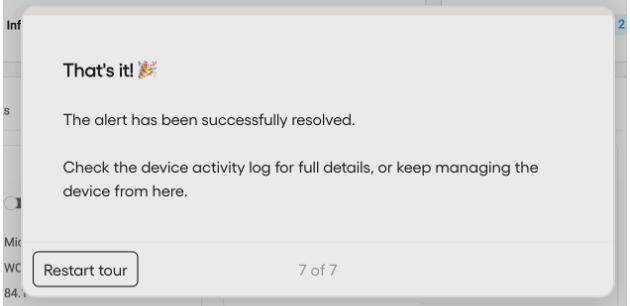
Alerts Dashboard + Tours 1–7:
The Alerts tour teaches by doing — guiding me to click “Critical Alerts” and explore the manage menu. The key unlock is scripts: the ability to run fixes automatically and remotely. This is a clear Aha moment where users see IT management start to scale without extra effort.
User psychology: Clicking, exploring, and running scripts builds confidence and habits. The confetti-free ending, however, makes the tour feel flat.
Business outcome: Adding a personalized wrap-up (“You’ve automated your first fix — welcome to IT Autopilot”) would reinforce the win and link directly to Atera’s core promise of saving 40% of IT workload.

(Patch management tour step 1)

(Patch management tour step 2)

(Patch management tour step 3)

(Automate now step 1)

(automate tour step 2)

(automate tour step 3

(automate tour step 4)
Patch Management + Automate Now Tours
The patch management walkthrough shows where to monitor missing updates and how to automate installs. This is another powerful Activation Trigger: turning repetitive IT tasks into automation. The ability to exclude patches demonstrates flexibility, but the checklist fails to update at the end, breaking momentum again.
User psychology: Automating patches proves the platform’s time-saving promise. Checklist failure, however, undermines the sense of accomplishment.
Business outcome: A working checklist would turn this into a clean onboarding close. Without it, some users leave feeling incomplete — a preventable source of trial abandonment.
Post Tours and Checklist Experience:

(My dashboard after completing onboarding)

(alerts dashboard with my device)
Alerts and first impressions
Back on the dashboard after completing the initial tours, Atera immediately flagged a fan speed issue on my MacBook. On one hand, this proves the system is active and monitoring devices.
On the other, it highlights a potential problem: in Mac-heavy environments, these low-value alerts could quickly pile up. Too much noise early on erodes trust in the platform and makes it harder to spot true issues.
Business impact: High volumes of false-positive alerts waste technician time, reduce focus, and increase the risk of churn.
Recommendation: Allow default suppression or configuration of Mac-specific alerts so trial users start with meaningful, actionable signals.
(creating a ticket)

(visiting a sample ticket)
Ticketing system and personalization
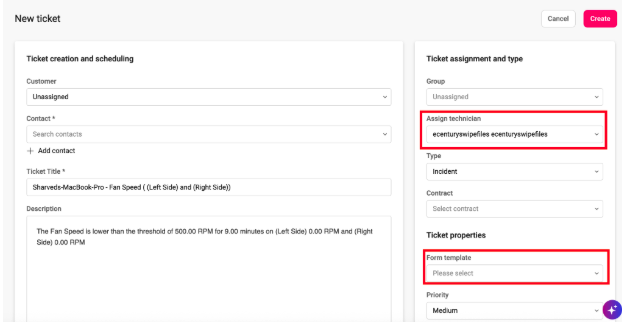
To explore further, I created a ticket from the alert. Atera’s ticketing is strong: you can templatize tickets, track time, add them to a calendar, and even summarize with AI if you’re on a premium plan. However, the basics are not polished. The system didn’t use my full technician name or company name, even though these details were collected earlier. For end clients, that lack of personalization breaks immersion and feels less professional.
Business impact: Early trials are a showcase moment. If tickets look incomplete or generic, IT pros may hesitate to roll the system out to their own clients. That creates friction between trial and paid adoption.
Recommendation: Automatically populate tickets with technician details and company branding to create immediate trust and a real-world feel.
What about the mobile app?

(Menu)

(Clicking download the mobile app)
Atera also prompts users to download the mobile app. This is smart, but it could be framed better. Right now, it feels like an optional extra, when in reality mobile access is a core value driver.
Business impact: Driving mobile adoption increases daily active usage and embeds Atera more deeply into a technician’s workflow. This makes it harder to churn and easier to demonstrate ROI.
Recommendation: Reframe the prompt around value (“Support clients anywhere, anytime”) and use the download as a chance to seamlessly verify a phone number.
What about the help center?

(Help Center)
The Help Center is well-stocked but tucked away. During onboarding, trial users are likely to encounter questions, and the more they self-serve, the faster they reach value.
Business impact: Stronger integration of Help Center resources lowers inbound support tickets and reduces CAC by making self-serve success easier.
Recommendation: Surface contextual Help Center links directly inside the onboarding checklist or within tooltips, so support feels proactive.
What about in-app notifications?

(Atera's in-app notification)

(Webinar/Training Page)
Atera pushes a bold in-app notification: “Master Atera in 30 minutes.” It leads to a training page with webinars and on-demand content — none of which are 30 minutes or less. The material itself is valuable, but the promise is misleading. Trial users expecting a quick-start may feel disappointed when faced with long-form sessions.
Business impact: Misaligned expectations weaken trust at a critical stage. If users feel the product oversells and under-delivers, they are less likely to invest time in training and more likely to abandon the trial.
Recommendation: Deliver a genuine 30-minute quick-start guide or video. Reframe longer sessions as “deep dive training” to keep the initial promise intact.
Scoring Atera's First Product Experience:
Overall Score: 7 / 10
I would score this stage a 7 out of 10. The foundation is there: tours highlight core features, the checklist creates direction, and prompts like mobile app download and knowledge base exposure nudge users toward broader adoption.
Where it falls short is in momentum and depth. Some tours feel more like feature showcases than true value drivers. The checklist risks becoming “tick the box” rather than “unlock real outcomes.” And inconsistencies — like promoting a “Master Atera in 30 minutes” message but linking to hour-long webinars — create micro-trust breaks that chip away at credibility.
In activation, these small cracks compound. Users who don’t hit their first aha moment quickly are far more likely to disengage, churn, or never convert to paid.
Quick Wins Atera Can Implement Within a Week:
Refine the checklist into outcome-driven steps
Instead of “create a ticket,” frame it as “Resolve your first issue in under 5 minutes.” The language shift makes it about value rather than activity.Close the webinar expectation gap
If the CTA promises mastery in 30 minutes, deliver a short, polished crash course that lives up to the headline. Consistency builds trust.Tighten in-app notifications
Reduce noise and guide users toward one clear next step at a time, avoiding split attention between tours, checklist, and webinar pushes.Highlight the mobile app with a clear benefit
“Stay on top of tickets even when you step away from your desk.” Anchor adoption in the real-world context of an IT technician.
Longer-Term Experiments Worth Testing
Adaptive onboarding journeys
Use role or usage signals to decide which tours trigger — e.g., a one-person IT shop doesn’t need the same setup flow as a 20-tech team.Progressive checklists
Reveal new tasks only after earlier ones deliver value. Keeps users engaged over days/weeks rather than dumping all tasks upfront.Habit loops through lightweight gamification
Reward progress (badges, completion streaks, subtle celebratory micro-interactions) to turn onboarding into a positive loop, not a chore.Contextual “micro-webinars” inside the product
Replace long sessions with embedded 3–5 minute guided walkthroughs at the moment of need.
Measurable Business Impact for Atera
To see why this matters, let’s run the math.
Baseline assumptions (from earlier funnel):
100,000 trial accounts annually
10% convert to paid → 10,000 paying customers
$3,000 ARPA → $30M direct funnel revenue
Today’s post-tour + product experience (est.):
Trial-to-paid conversion: ~10%
Retention at 12 months: ~70%
Scenario 1: Conservative Gains
+10% improvement in trial-to-paid (checklist clarity, webinar fix, mobile app adoption)
+5% boost in retention through habit loops and adaptive onboarding
New outcome:
11,000 paying customers
77% retained → +$3.3M lift
Scenario 2: Aggressive Gains
+20% trial-to-paid (personalized flows, outcome-driven tours, in-app “micro-webinars”)
+10% retention improvement (gamification + adaptive journeys)
New outcome:
12,000 paying customers
80% retained → +$6–8M lift
That’s $3–8M annually unlocked at the activation layer alone — compounding on top of the $8–15M from signup improvements. Together, these optimizations could put Atera within striking distance of the $25M revenue upside promised in this teardown.
What SaaS Founders Should Take Away
Tours should unlock value, not demo features
Every guided step must answer: Did the user just succeed at something meaningful?Consistency is trust
If you promise 30 minutes, deliver in 30 minutes. Every mismatch creates doubt, and doubt kills conversion.Checklists are powerful — if they’re outcomes, not chores
The difference between “Add a device” vs. “Protect your first endpoint in seconds” is the difference between a task and a win.Activation is the silent revenue driver
A small uplift in trial-to-paid and retention at this stage cascades into millions. Churn prevention is just as powerful as acquisition.Onboarding never stops
The first experience isn’t a one-off. Done right, it builds habits, confidence, and momentum that compound long after the free trial ends.
⚡ Every SaaS I analyze has hidden churn triggers like this. Through my 7-Day SaaS Activation Sprint, I help founders patch leaks and accelerate growth. Book your founding strategy call here.
Purchase Experience of Atera

(Pricing Page part 1)
Atera takes a very different approach to pricing compared to most IT management tools. Instead of charging per device, they bill per technician with unlimited endpoints. On paper, this looks like a huge win for customers because there is no penalty for adding more devices. In practice, one technician can usually handle around 100 endpoints before operational strain sets in. This creates a natural ceiling that encourages larger customers to purchase additional seats.
Key takeaway for SaaS founders: Pricing models define the type of customer you attract and how they scale with you. By tying costs to a manageable resource (technician vs. device), Atera incentivizes growth while maintaining predictable revenue.

(Pricing Page part 2)
The Expert plan is visually highlighted and feels like the natural choice for most buyers. This is classic anchoring psychology: Professional feels basic, Master feels premium, and Expert becomes the safe middle choice. Each plan also includes a description of who it suits best, helping customers self-select without friction. Incremental $30 jumps between plans are small enough not to scare buyers but large enough to increase annual revenue per account.
SaaS founder takeaway: Consider how tier spacing and plan framing can nudge customers toward the most profitable plan. Clear, descriptive plan positioning reduces analysis paralysis and increases conversion.
Measurable business impact: Highlighting a recommended tier increases the number of accounts that pick that plan. Even a 5% shift from Professional to Expert can result in hundreds of thousands in additional ARR for a mid-size SaaS business.

(pricing page part 3)
Atera gates features strategically. Professional starts with limited reporting, shorter audit log history, and smaller file transfers. Expert adds AnyDesk remote access, longer log retention, and more reports. Master and Enterprise expand further with advanced analytics, longer audit retention, data recovery, and custom onboarding.
SaaS takeaway: Feature gating at natural pain points drives both perceived value and expansion revenue. Think about where your customers feel friction and offer tiered solutions that unlock measurable improvements in their workflows.

(Atera's Internal Upsells)
AI IT Copilot is highlighted as a per-technician upsell. Other add-ons include network discovery and advanced patching. These upsells tie directly to pain points already introduced in onboarding, which makes them more likely to convert.
SaaS founder insight: Upsells should build on customer education. Integrating upsells into the product journey, rather than presenting them as a surprise at purchase, increases adoption and ARPU.
Measurable impact: If AI Copilot adoption increases ARPU by 10% per technician, Atera could see several million in additional revenue annually from existing accounts.

(Atera's External Integrations)
Atera monetizes external integrations like Splashtop and Bitdefender on a usage basis rather than per technician. This hybrid model maintains a predictable subscription revenue while capturing extra revenue from heavy users.
SaaS takeaway: Usage-based add-ons protect your core subscription while monetizing power users. It’s a way to scale revenue without raising prices universally.
Scoring Atera's Purchase Experience:
I would score Atera’s purchase experience an 8 out of 10. Pricing is innovative, plan anchoring is smart, and upsell layering is effective. Opportunities exist in clearer differentiation between tiers, more explicit ROI messaging on upsells, and tighter integration packaging.
Quick wins for SaaS founders:
Visualize feature differences: Add comparison tables or icons to make tier differences instantly understandable.
Highlight ROI on upsells: Add real numbers, e.g., “Save up to 40% of technician workload per week.”
Bundle integrations: Present them as recommended packs to increase attachment rate rather than optional extras.
Longer term experiments:
Dynamic pricing messaging: Adjust recommendations based on company size or usage collected during signup.
Outcome-based pricing: Tie advanced features to measurable savings or efficiency gains.
Limited-time upgrade nudges: Encourage faster adoption of higher tiers, e.g., “Unlock Expert features for 90 days at Professional pricing.”
Measurable business impact for Atera:
Improving tier clarity and upsell framing could lift ARPU by 10%, adding $7.5 million annually.
Expanding adoption of integrations by just 5% could add $3.5 million.
Together, conservative improvements could unlock $11 million per year, moving Atera closer to $90 million ARR.
Aggressive experiments, including pricing nudges and outcome-based upsells, could lift ARPU by 20%, adding $15 million and bringing total ARR near $100 million.
Metrics to track:
Plan mix and distribution across Professional, Expert, Master, Enterprise.
Upsell attachment rate per account.
Integration adoption correlated with trial-to-paid conversion.
ARPU expansion over the first 12 months of the customer lifecycle.
SaaS founder takeaway: The purchase experience is the bridge between perceived value and revenue realization. When pricing psychology, feature gating, and upsell design are aligned, every step of the purchase journey can directly grow ARR.
Conclusion
Unlocking $25 Million in Additional Revenue Through Optimized Onboarding
Atera’s onboarding, from pre-sign-up marketing to sign-up, first product experience, and purchase, has proven strengths, but also significant opportunities. By strategically addressing friction points and activation gaps, Atera can unlock an additional $25 million in annual recurring revenue while enhancing the user experience for IT teams worldwide.
What Atera Does Well
Engaging Pre-Sign-Up Marketing: Ads and videos clearly speak to IT pain points, highlighting problems Atera solves. The campaigns educate prospects, guide them to trials, and establish initial trust.
Generous Trial and Low-Friction Sign-Up: Giving users pro-plan access with no credit card requirement accelerates adoption.
In-App Demonstrations and Checklist Guidance: Demo devices, AI Co-pilot ticket responses, and threshold alerts make value tangible. Users can quickly see results, which is critical for early activation.
SaaS Founder Takeaway: Highlighting value before the trial starts and reducing friction during sign-up directly increases trial starts and activation—core drivers of ARR growth.
🚀 Atera could unlock $25M with the right onboarding design. What about your SaaS? I’m offering 1–3 Founding Case Study slots for free, where I’ll personally analyze your onboarding and build an activation plan. Book your call here.
Step-by-Step Path to Unlock $25 Million ARR:
Here’s how each optimization adds up to unlock $25 million in incremental ARR for Atera:
Sign-Up & Login Improvements
Add SSO/social login + streamline multi-step login
ARR Impact: $5–7.5 millionMessaging & CTA Alignment
Standardize claims and tailor CTAs per step
ARR Impact: $5–6 millionEmail Engagement & Activation
Personalized emails nudging agent installs & checklist completion
ARR Impact: $6–8 millionIn-App Personalization & Tours
Dashboards with company names, role-driven tours, Autopilot previews
ARR Impact: $3–4 millionPricing & Purchase Optimization
Streamlined pricing, clear ROI, transparent upsells
ARR Impact: $2–3 million
➡ Total Potential Incremental ARR: $21 - 28.5 million
💡 SaaS Founder Takeaway: Each optimization is not just a tweak—it’s a revenue lever. Removing friction, aligning messaging, and personalizing communication compound across thousands of trial users. What looks like a micro-optimization at the UX level translates into tens of millions in ARR when scaled.
Concluding Insights:
Atera has already demonstrated remarkable success with $75 million ARR. By focusing on strategic onboarding improvements:
Reducing friction during sign-up
Aligning messaging and expectations
Actively driving activation with personalized emails and tours
Streamlining purchase decisions
…Atera could realistically achieve $100 million ARR.
Key Lesson for SaaS Founders: Onboarding and purchase experience are not just UX exercises—they are direct levers for revenue growth. Every micro-optimization compounds. Implementing data-driven improvements in pre-sign-up, sign-up, and first-use flows ensures that every new user contributes more value to the business.
Actionable Next Step: Map each onboarding and activation touchpoint, identify friction, and create targeted experiments. Track completion, activation, and conversion—then iterate. This is how SaaS businesses move from good ARR to exceptional ARR.
🔥 This teardown is part of my Founding Case Study Program. I’m opening just 3 free spots this month for SaaS founders who want to increase activation and retention fast. Join my 7-Day SaaS Activation Sprint → book your call here before the slots are gone.


